JoBeth Williams welcomes you! "They're heeeeeeeee--eeeere"
Giggly Rosario Dawson & Angie Harmon announced the SAG nominations at 9:00 AM EST after being introduced by JoBeth Williams.
Though this is the last major clue as to where Oscar acting nominations will go, it is not the "this is it!" twin that many like to claim.
Important Differences From SAG to Oscar: Contrary to what you often read on the internet there is not significant overlap in the voting pools between SAG and Oscar. Unless they've recently changed their rules, SAG randomly chooses a sliver of its membership each year to do the nominations. Some miniscule percentage of them might be Academy members but the numbers don't add up to a big percentage. SAG is a mammoth union, representing 200,000 film, tv and background performers and all dues paying members can vote on the winners. Oscar's acting branch is infinitely harder to join; it's a final club on steroids to use The Social Network as handy 2010 reference. There are 1,205 voting actors in the Academy who all get nominating ballots. All of the Academy's 1,000+ actors are or were SAG members (having acted in films for years) but the other 198,795 SAG members are definitely not members of the Academy of Motion Picture Arts and Sciences.
Other key differences: SAG nominators are (statistically) fonder of child and very young adult actors than Oscar. They're also arguably more populist in their choices overall having given the big prizes to people from smash comedies like Renée Zellweger in Chicago (2002) or Johnny Depp in Pirates of the Caribbean (2003) and arguably more influenced by your place in the Hollywood food chain, choosing legends over newbies for wins in hotly contested contests like Bening beating Swank in 99/00, Day-Lewis over Brody in 02/03 or Christie beating Cotillard in 07/08. They are also not allowed to vote their own mind when it comes to "lead" versus "supporting" issues. Oscar voters may vote for you in whichever category they personally feel is correct. SAG voters may only vote for you in the category that your studio submits you in (which explains Keisha Castle Hughes' bizarre "supporting" citation at SAG for Whale Rider).
Nominations with commentary after the jump
Showing posts with label Hilary Swank. Show all posts
Thursday, December 16, 2010
Tuesday, November 30, 2010
Off Screen Break. What's Going On?
Because sometimes, taking a wee break from the silver screen, helps you appreciate the movies more.
EW Lady Gaga is insane. Promises "Born This Way" is 'best album of the decade'. So no sophomore slump then, Gaga?
YouTube Madonna opening her Hard Candy gym in Mexico. I wish I could work out there. I obviously need some sort of dominatrix to push me if I'm ever going to get in shape. (sigh)
AV Club Spider-Man: Turn Off the Dark first preview "no one broke their wrists or feet or died." Seriously, why do people keep hiring Julie Taymor and throwing money at her? How long will this Broadway musical have to stay open to even break even? 2018?
Band of Thebes best LGBT books of the year?
Vulture Hilary Swank developing a reality tv game show? Bizarre.
Or you can just consider this an OPEN THREAD. Lots of movie awards news popping up, yes, but WHAT ELSE are you thinking about right now? I'm watching Pee Wee Herman on Broadway as you read this! I know you are but what am I?
*
Labels:
broadway and stage,
getting to know you,
GLBT,
Hilary Swank,
Lady Gaga,
madonna
Wednesday, February 11, 2009
A Conversation With Amy Adams
The Light in Her Heart"There are people who go after your humanity, Sister James. Who tell you the light in your heart is a weakness. That your soft feelings betray you. Don't believe them."Those words are spoken to a meek nun who is uncomfortably wedged between two very potent personalities with agendas in John Patrick Shanley's Doubt. The film version is nominated for five Oscars, including one for Sister James herself, Amy Adams. If the movie star in this nun's cowl has ever had any similar doubts about her own "soft feelings" it isn't showing. She knows they're no weakness but a strength. She's been spreading joy in movie theaters like there's an endless supply of it. If there's a current movie star who embodies "the light in your heart" isn't it Amy Adams? She seems content and grateful for this particular persona. As she told me in our conversation, she doesn't feel the need to step away from the cheery innocents just yet. "I'm not really interested in doing something just so I can prove I can do it. I really enjoying the roles I'm doing." In short, she has no immediate plans to dim the light.
Even before she became a household name for her cheer and comic gifts, Amy had specialized in madly grinning perky girls. Think of her exuberantly comic beauty queens in Drop Dead Gorgeous or Psycho Beach Party or that metal mouth cutie in Catch Me If You Can. Those were small roles but she was shining in them. It all came together for the gifted actress when she got the part of the very pregnant meercat-loving Ashley in 2005's Junebug. A well received Oscar nomination followed. Two years later she became a major star when she aced the animated princess as flesh and blood role of "Giselle" in the smash hit, Enchanted. She missed out on an Oscar nomination for the latter but she still ended up at the big show anyway, terrified and singing a wordy song to Hollywood's biggest names. "People will forgive me if I'm not a perfect singer, I'm an actress." She remembers, laughing. "These were the lies I told myself... among others!"
Her ascendance in Hollywood the past few years seems like a fairy tale itself -- all sudden and complete, glamorous and, well, happy (though an ending is thankfully nowhere in sight). The public rarely notices the years spent building up to these breakthroughs but the Princesses of Hollywood are usually ladies in waiting first. Amy was game to talk about those less lucrative years, too, fielding fannish questions about guesting on Buffy the Vampire Slayer and that rarely discussed through line in her career: she also took over a Sarah Michelle Gellar role early on and her next film with Meryl Streep Julie & Julia is based on a book with frequent Buffy obsessing in its pages. Amy sadly informs that the book's Buffy musing get the axe in the film version. And yet, even with this supernatural diversion to the conversation it all keeps coming back to the Disney princesses. Her most vivid memory from the Buffy set is singing The Little Mermaid on a lunch break with Joss Whedon.
Despite all those years in the trenches of TV and bit parts, her career is the stuff of fairy tale princesses now, especially since she got there playing Giselle. In grittier terms I wonder if she's feeling like a rock star what with the mass love and adoration -- I'm guessing she could fill stadiums. "I don't know if rock star is the right word..." she counters, "but I'm having a good time."
The best option is the iTunes version i.e. the enhanced podcast but you can listen to the simplified mp3 if you don't have an enhanced player.Enjoy, discuss and please do share your favorite Amy Adams related moment in the comments. It's hard to choose just one, isn't it? If the mere thought of narrowing down your favorite Amy memory is exhausting, please feel free to nap in a nearby meadow or hollow tree.
We understand.
*
Monday, October 16, 2006
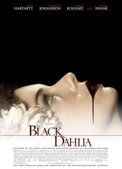
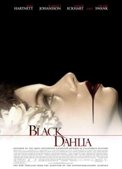
The Black Dahlia
I once read in a magazine that the perception of beauty on the part of the beholder is largely dependent upon the visual symmetry in what they're beholding. If I'm remembering it correctly, the article cited Denzel Washington (among a few other famous faces) as a face in nearly perfect balance and, thus, considered exceptionally attractive. Now the vast majority of people, civilian and celebrity alike, do not have completely symmetrical faces. But this doesn't mean they aren't beautiful. It's just that their beauty is less commonly agreed upon. It's lopsided, if you will.Every time I've attempted to write about The Black Dahlia, "lopsided" kept forcing its way into the text. For all of this word's maddening insistence on being part of the write-up, it remains an infuriatingly vague descriptor unless it's tacked on to every other remark. And so it shall be.
The Black Dahlia gets my vote for "Best Confounding Picture" of the year. It's certainly not the "Best Picture" in a more general sense. It's difficult to watch and even more difficult to write about. But for moviegoers who thrive on searching conversations after screenings, for those who want to eke out more complicated ideas about what they've just watched, it's a must-see. For moviegoers who are content to react with directional thumbs: move along. This is not the movie you're looking for.
The asymmetry of The Black Dahlia isn't immediately noticeable. Like the famous book upon which it's based, the film begins with a veritable orgy of back-story –it's expositional and plotty enough for three or four movies. Given how long we wait for any mention of the Dahlia herself, we have every reason to suspect that the movie will continue to feed us information at this breakneck speed, faster than we can process all the character names and motivations. Put in its very simplest form this movie is about two cops investigating the murder of a young unemployed actress. But the plot isn't simple at all. As soon as all of the characters are introduced, the movie seems to stop and any forward momentum in plotting is based entirely on backtracking. Either I couldn't entirely follow it (possible) or, aside from a couple of key sequences, most all of the important story details take place offscreen or in an unfilmed prequel.
In other words, if you graphed the plot out the Dahlia narrative wouldn't look like a bell curve but would resemble a longtail theory.
Lopsided.
And there's still more of an imbalancing act to come. The most noticeable is found in the casting and reflected in the resultant ensemble work. The performances are all over the map. You don't notice this at first since the cops, one hotheaded (Aaron Eckhart), and one cool and careful (Josh Hartnett), are meant to balance each other out. Both actors are serviceable enough to sell their roles without getting in the way of DePalma's primary concern: the women.
All of the female characters within The Black Dahlia are either brutal or brutalized but the actresses playing them create a skewed portrait. There is a true seesaw of quality in plain view. Both Scarlett Johansson and Hilary Swank are miscast and inept, albeit in different ways. The first performance is a gaping abyss of nothing (Johansson looks lost and is too young for her role) and the second is filled with ACTING! but they're both cringeworthy in their shakier moments. On the other hand, Fiona Shaw and Mia Kirshner have rarely been so well employed. They fare much better.
Shaw plays an eccentric and wealthy mother (to Swank's Dahlia wannabe) and her performance is positively unhinged. She is so forceful in her tiny window of opportunity that she feels like something of a co-director: she's either completely keyed in to the more gonzo instincts of the divisive auteur behind the camera or she's interpreted her part so forcefully that you're left to piece the entire movie back together once she's ripped it to shreds. Mia Kirshner is also mesmerizing. She makes the most of this sad victim. Appearing only in flashback, she is the ghost that haunts the rest of the movie, even when she's not onscreen. She gives The Black Dahlia it's only deep emotion: despair.
In the already famous moment that announces the Dahlia's entrace into the larger film narrative, the camera is high above the ground looking down at some city blocks where two stories are, we realize, unfolding simultaneously. At the top of the screen a woman sees something in a field and begins to scream and run from her awful discovery. It's a genius sequence, instantly repellent and also begging to be seen: in other words, the true crime genre in a nutshell. As the terrified witness runs from the ghastly vision the camera follows and then abandons her, eventually returning us to the original story, this new crime already haunting the audience though it hasn't yet spooked our protagonists. But it's also far too emblematic of the overall problem with this film. Though Kirshner plays the title character, her story is all on the fringe of a beautifully visualized but otherwise misjudged and overpopulated noir. One wishes that the movie had been less faithful to the book. If more of the densely plotted first half had been jettisoned or streamlined, perhaps the good stuff in this movie...the great stuff about a troubled actress and her gruesome demise, the material that has clearly inspired both the director and his key actress could have cut deeper. This murder leaves a horrifying imprint but it's rather like a ghost image itself. You can't quite see it.
It's fascinating but frustrating that the film ends with the line like "come inside" when so much of what you're seeing is obscured and inpenetrable. Huge chunks of The Black Dahlia seem entirely disposable but there are moments that refuse to be shrugged off. They plead with you to look closely at this not quite beautiful thing.
B-
*
Subscribe to:
Posts (Atom)