Showing posts with label Guy Maddin. Show all posts

Thursday, January 07, 2010

Modern Maestros: Guy Maddin

Robert here with the makeover of my Directors of the Decade series, henceforth known as Modern Maestros (because alliteration is always awesome).   The mission statement will be simple: an ongoing series celebrating working directors who define the state contemporary cinema.  Suggestions are always appreciated.  That being said, let's start!

Maestro: Guy Maddin
Known For: Modern purveyor of manic, kinky, autobiographical and sometimes silent films.
Influences: The expressionists… Eisenstein, Dovzhenko, Murnau, etc.
Masterpieces: His two most recent and most autobiographical.  My Winnipeg and Brand Upon the Brain.
Disasters: zero
Better than you remember: Maddin has yet to make a bad movie, so if you dislike any of them give it another shot.

Awards: Best Canadian Film at TIFF is the highest award that’s thus-far been bestowed on one of cinema’s most creative directors.
Box Office: The Saddest Music in the World has grossed over 600 thousand dollars to date.
Favorite Actor: Guy teamed with Isabella Rossellini for the feature The Saddest Music in the World the short My Father is 100 Years Old and as one of many narrators of Brand Upon the Brain.


No one makes silent films anymore. Even Chaplin eventually relented and made talkies. To make a silent film in these our modern times would be nothing more than a gimmick, right? Except Guy Maddin has found a way to make it work. Mind you, Maddin doesn't only make silent films, but his cinema is always and inevitably influenced by the great silent expressionist masters.  They never seem like an experiment or merely an intellectual exercise.  Every one of Guy Maddin's films is a stylistic homage to films past and every one feels completely modern, exciting and new.  Why?  Because Maddin's best films act as a recreation of memories, whether they be his own bitter loves (Cowards Bend the Knee), controlling parents (Brand Upon the Brain), or legendary hometown (My Winnipeg).  And memories do not exist in straightforward narrative form.  They're jumbled up, over-exaggerated, and intensified by fantasy and fear... as are Guy Maddin movies.  Even Maddin's non-biographical films exist in a world of fantasy where the expressionism becomes a necessity.  After all, if you're going to make a ballet version of Dracula, how else but as a silent film?  Although he may be best known as a silent filmmaker (even though he's technically made more talkies), Maddin's talents don't end when the speaking starts.  Take this line of dialogue from The Saddest Music in the World when Marie de Medeiros has been asked if she's an American: "No I'm not an American.  I'm a nymphomaniac."

Speaking of kinky sex, let's talk about things often found in Guy Maddin movies.  Forty-two years since the Hayes code expired and there's still something that feels just a little forbidden about seeing nudity and sex in a black and white or silent film.  But it's not just Maddin's intention to tittilate.  He's interested in how sex controls and manipulates us (the women in Maddin's films make the women in Truffaut and Godard's films look like Disney princesses).  And there are few areas where he's not unwilling to tread.  A chapter in Cowards Bend the Knee unexpectedly entitled "Fisty" turns out to be about exactly what it sounds like.  Invariably Maddin proceeds with a comedic touch.  He needs to, as the world he portrays is random, cruel and unforgiving (often with his autobiographical stand-in serving as the patsy).  But still there is that touch of non-seriousness that makes watching a Guy Maddin film a fun experience, never a burden.


Take his short The Heart of the World.  The world is ending as a woman cruelly rejects our two protagonists.  Yet there is not a depressing moment.

So what makes Guy Maddin a filmmaker of our time?  He made his debut feature in the 80's.  Followed it up with three features in the 90's and has made five (of his most successful) films since the turn of the century.  Few directors are doing what Guy Maddin does, that is using the medium outside of it's expected form. But be warned, watching a Guy Maddin movie will only make you wonder why it is that so few other directors are determined not to be bound by common cinematic narrative standards.  And those other directors may start to seem a little too average and conventional.  Guy Maddin's latest film, My Winnipeg allowed him to show off his talents to a new extent, adding elements of surrealism and documentary into his uncategorizable style.  Roger Ebert recently named it one of his top 10 films of the past decade. So is Guy Maddin at the peak of his career?  I hope not, as that would suggest an inevitable downturn.  His next feature project is as of yet unannounced, though he continues to make short films in between.  Whatever it is it will be wildly inventive and courtesy of one of the most creative filmmakers working today.

Friday, June 13, 2008

Now Playing: Hulk Smash Puny Wahlberg!

That's gonna hurt! You really should watch your surroundings
if you choose to walk around half-naked in your downtown area.


I couldn't resist. Not to rub salt in the upcoming The Happening wounds. That wouldn't be nice. But misery loves company and I woke up totally sick today. Sore throat -- i can't even swallow -- probably from being outside for too many Shakespearean soliloquies. Sadly, I'm in no shape to hit the movie theaters even though, after that week in Florida, I'm desperate to see some movies. Argh!

W I D E
The Happening ~In which Mark Wahlberg and Zooey Deschanel experience mass suicides and strange, well, happenings. From M Night Shyamalan, he of the smart personal branding, strong eye, and terrible ear.
The Incredible Hulk ~In which Marvel Studios pretends that Ang Lee isn't one of the best filmmakers in the world by pretending that his movie didn't really count. Expect lots of smashing... and probably smashing box-office too, given the Iron Man lead-in to Marvel mania.

L I M I T E D
Baghead ~I haven't watched this trailer because the poster terrifies me. If it's a horror movie I don't want to see it. I can't imagine that anyone would make a satire of Bob & Carol & Ted & Alice at this point in time but that's my second thought (post-horror) when I glance at the poster.
My Winnipeg ~ I always want to love Guy Maddin's movies. His visuals are fun, personal and above all drunk on silent film, so I feel a kinship. And yet... I don't love his movies. Unless they're very short like The Heart of the World or Sissy Boy Slap Party in which case I am so there.
Encounters at the End of the World ~Werner Herzog is the man. I shall wear my Herzog t-shirt today in honor of this movie which I shan't see on account of staying in bed.

God bless laptops!
*

Tuesday, September 18, 2007

An American in Toronto: Post-Mortem

Steve reporting on the Toronto International Film Festival

So I'm back in America now. (Truth be told, I've been back in America since last Saturday -- in fact, my last update was posted from my home computer... but now I'm spoiling the illusion). TIFF is but a sweet memory. Yet where have we been, really? Let's look back and see what good that Fest Pass really did.

Top 5 films: 1) Silent Light (Carlos Reygaydas)
2) My Kid Could Paint That (Amir Bar-Lev)
3) Stuck (Stuart Gordon)
4) My Winnipeg (Guy Maddin)
5) 4 Months, 3 Weeks and 2 Days (Cristian Mungiu)

Worst film: Christian Frosch's dreadful, incoherent sci-fi slagpile Silent Resident.

<-- Best lead actor: Martin Freeman in Nightwatching. (Runner-up: Guillaume Depardieu in The Duchess of Langelais.)

Best lead actress: Inés Efron in XXY. (Runner-up: Anamaria Marinca in 4 Months, 3 Weeks and 2 Days.)

Best supporting actor: Vlad Ivanov in 4 Months, 3 Weeks and 2 Days. (Runner-up: François Berléand in A Girl Cut in Two.)

Best supporting actress: Ann Savage for My Winnipeg. (Runner-up: Laura Vasilu in 4 Months, 3 Weeks and 2 Days.)

Worst acting, any division: Jaime King trying to look distraught in They Wait. (Runner-up: The rich kid in the mummy outfit in Diary of the Dead.)

Best direction: Carlos Reygadas for Silent Light. (Runner-up: Hou Hsiao-Hsien for Flight of the Red Balloon.)

Best cinematography: Silent Light. (Runner-up: Eat, for This Is My Body.)

Number of films seen: 36

Number of films liked: 19

Number of films walked out on: 2 -- Takashi Miike's Sukiyaki Western Django (I fell asleep) and Ulrich Seidl's Import Export (the forty minutes I saw didn't convince me that it would be about anything other than how Austria and Eastern Europe are the most awful places in the world).

Number of films to which I had tickets but skipped seeing: 7 -- Lee Myeung-se's M (terrible buzz), Doug Pray's Surfwise (arrived late), Julian Schnabel's The Diving Bell and the Butterfly (napped), Ben Hackworth's Corroboree (napped), Jacob Thuesen's Erik Nietzsche: The Early Years (packing), Jiang Wen's The Sun Also Rises (left a day early) and Alexandre Bustillo & Julien Maury's Inside (ditto).

Film I most regret missing: Until the last couple days of the fest, it was Lee Chang-dong's Secret Sunshine, but after a late surge of great notices, it's now José Luis Guerín's In the City of Sylvia.

Film I least regret missing: Either Nothing Is Private or The Jane Austen Book Club, take your pick.

--> Number of times I told people that Silent Light was my favorite film of the festival: At least twice a day after Day 4.

Number of times that was greeted with, "What's that?": About half the time.

Number of trips to the liquor store: Just one, surprisingly.

Number of days I rejoiced in not driving my car: All nine, baby.

Number of nights in which I got over five hours sleep: Two. And one of them was the pre-fest night.

Number of cups of coffee drank: Somewhere between 25 and 30 (I lost count).

Number of beers consumed: 18

Number of beers consumed in completing this rundown: Only one, but it's a big one -- Avery The Beast Grand Cru Ale 2006. 14.6% ABV will get words a-flowin'.

And that should just about do it for me... thanks for reading, folks. And thanks again, Nathaniel, for letting me blather on as I have. It's been fun.

Sunday, September 09, 2007

An American in Toronto: Day Two (Stillness and Silence)

Steve reporting from the Toronto International Film Festival

[You may have noticed that Day 2 is just a teensy bit late. The reason for all this will become clear when I post my Day 3 writeup tonight.]

One thing that has surprised me about Toronto is the absence of jaywalking. As one accustomed to the rhythms of New York City, it's been quite odd to see people actually, y'know, waiting at a red light. Even when the traffic is clear, the majority of pedestrians will choose to stand on the corner and wait for their turn. Hell, I'm apprehensive about doing it and I do it all the time. Yet I'm afraid that, the moment I step into the crosswalk against a red, a pedestrian traffic SWAT force is going to pull up and, guns drawn and cocked, demand forcefully that I plant my feet back on the corner and wait for the green. Maybe that's the tradeoff for the fact that cars here actually stop and let pedestrians pass before trying to proceed, even the ones making right turns. Patience, it seems, is an important virtue.

Given the nature of much of the international film-festival scene, patience is also helpful when cruising the festival. Friday, for some reason, ended up being a contemplative-cinema kind of day, the kind of day where much of my time was spent admiring the craft and/or acting of the films seen while overlooking the fact that not much is really happening and it's not happening at a languid pace.
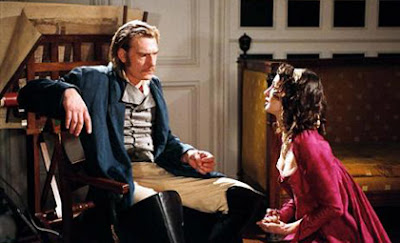

This is, of course, not necessarily a bad thing, especially when the man at the helm of the contemplation is Jacques Rivette. Rivette's films are notoriously lengthy and expansive in scope -- his masterwork, 1971's Out 1, runs a stunning twelve-and-a-half hours -- so something like the 135 minutes of Ne touchez pas la hache (literally, Don't Touch the Axe but retitled The Duchess of Langelais, after the Balzac novel it uses as a source, for the English-language market) is a workman's holiday for him. Langelais charts the illicit push-pull relationship between Jeanne Balibar, as the titular Duchess, and Guillaume Depardieu, as the fiery General Montriveau, and the fascination lies in watching these two souls, so obviously enamored with one another, waylaid by stubbornness and the mores of the times into destructive, emotionally evasive gamesmanship. Balibar gives a fine performance -- early on, her modest, slightly sly smile is allowed to crack at the corners just enough to show the roiling underneath, and when the narrative shifts to focus on her in the film's second half, she shoulders the burden admirably, exposing us to this woman's heartbreak as she goes from trying to keep up appearances to not giving a damn. Her every move is matched by Depardieu's implosive turn; a steely gaze and careful economy of movement cast off a perfect impression of a strong-willed man who will not be outflanked by the Duchess and wants to have his terms reign. Rivette does right by the tony surfaces and placid rhythms of 17th-century court life, yet this seeming calm makes the brutal emotions beneath the surface that much more explosive. I think Langelais loses a bit in its second hour (or that could just be the AM screening time talking), but overall it's a worthy addition to a striking body of work.

Taiwanese fest favorite Hou Hsiao-Hsien also has a significant body of work to his credit, of which I am unfortunately ignorant. His Flight of the Red Balloon is only the second film of his that I've seen (after Millennium Mambo); on the strength of it, though, I'd be interested in combing through his earlier films. Balloon is a gentle and lovely piece about a French family, and the story (such as it is) contrasts the quiet everyday routines of young Simon (Simon Iteanu) and his new nanny Song (Fang Song) with the more hectic schedule of Simon's mother Suzanne (Juliet Binoche); meanwhile, the title object drifts in and out of the film as Hou sees fit, never quite interacting with the characters but sort of observing them. The unhurried observational style, heavy on long shots and low on edits, is mated with a loose improvisatory acting style, resulting in a number of moments that feel true in ways that most other films wouldn't think to acknowledge. (The sound design in particular is spectacular -- there's a moment where Binoche, climbing a set of stairs, bangs some keys on the metal railing, and the resulting clang took me aback simply because it's not the kind of thing I normally expect films to focus on.) It's a film that I find growing in my memory, simply because its leisurely pleasures need time to sink in. I'd like a chance to rewatch Balloon somewhere down the line, though I'm still unsure of how it relates to the famed original French short.

What, then, does one watch for an encore after a Hou film? Being the kind of guy I am, I followed up the contemplative with something even quieter: a film with no sound at all. Peter Hutton's At Sea formed the major portion of What the Water Said, the first program of Toronto's annual avant-garde section Wavelengths. On paper, At Sea doesn't sound like something that would hold the interest all that strongly -- it's an hour divided into three segments depicting the life cycle of a freighter boat, shot mostly in carefully-composed long shots and in absolute silence. In practice, though, it's hypnotic -- the lack of sound gives the footage a hushed, almost foreign grandeur. The first segment, in which we see a boat being built, was the most interesting to me, mainly because the extreme distance between the camera and the boat, necessary to capture the size of the thing, also made the people working on the boat very small. It's a depiction of scope, of people reduced to components in an environment, that I wish I saw more often. At times, Hutton's film comes off as a benevolent cousin to Werner Herzog's scorching Lessons of Darkness -- both films tell a story using primarily images, both focus on the (accidental?) beauty in the makeup of things and both show man reduced to a function of his surroundings. Pretty stirring stuff, in other words. (There were also two shorts on the same program. David Gatten's What the Water Said, Nos. 4-6 provides some formal pleasures similar to the work of Stan Brakhage, but the random nature of its construction -- Gatten submerged celluloid in ocean water to see what kind of patterns would emerge -- stymie the emotional force of Brakahge's best works; meanwhile, as a meditation on the aftermath of the tsunami that hit Thailand, Chris Ching Chan Fui's POOL means well.)
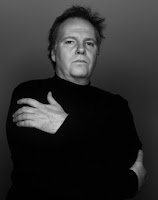
Canadian auteur Guy Maddin also has a jones for silent films, yet his films could be called anything but patient. His latest film My Winnipeg is ostensibly a documentary portrait of his hometown, yet one glance will tell you that it's just another inspired entry in the ludicrous filmography of Maddin -- its historical worth is suspect, but its entertainment value is endless. Maddin's last couple films have been inexorably moving towards the personal as he refines his frenzied muse, and My Winnipeg might be his most ecstatically unfiltered slice of madness yet. It also sees him indulging in dialogue, a rarity for Guy. Yet even with words occasionally coming from his characters' mouths, this is still unmistakable Maddin. It's all here -- the smash edits that would fill Dziga Vertov with pride, the ironically humorous interstitals, the Freudian fetishes and Oedipal worship, the odd mix of Canadian pride and deprecation, the talismanic repetitions, the naked male butts. Plus, Maddin himself was on hand to provide the running commentary that functions as both a way to hold the film together and a free-floating dollop of fun all its own. If you get a chance to see My Winnipeg, do so -- it's a hilarious mix of documentary and personal reflection with a soupcon of insanity for taste. Besides, where else are you going to hear someone rhapsodizing on the electromagnetic properties of bison as one reason Winnipeg natives have trouble leaving the city?

Tuesday, April 10, 2007

Top Ten: Prosthetic Appendages

tues top ten: a weekly series for the list lover in you and the list maker in me


Rose McGowan may have the first machine gun leg in the current "hit" Grindhouse [Please allow me to willfully ignore the box office problems. I'm not a big gore or exploitation movie buff but the least the gore loving moviegoing public could do to satisfy my worries about their bloodlust is go see something with at least some pretense of quality or reason for existence beyond the carnage. Thank you -your editor] but she isn't the first actor to be blessed with a memorable part. Get it? "part" I kill myself.

Ten Memorable Prosthetic Appendages

10 Virginia Woolf's nose in The Hours. When Denzel Washington presented Nicole Kidman with her Oscar for this movie he made a really stupid joke about winning "by a nose". But, you know, that probably did tip the scales in her favor what with the Academy being the Academy. A gimmick goes a long way.

09 ROSE MACGOWEN HAS A MACHINE GUN FOR A LEG! Yes, we covered this already. Calm down.

08 Adam's demon arm gets firepower in Buffy the Vampire Slayer (season 4). Or as Adam likes it call it: upgrades. Yes, BtVS works its way onto every top ten list. I'm an addict, can't be helped. If you still have not taken the cue and learned to love this television series as much as I than it's really your problem, not mine.


07 Björk and Matthew Barney legs in Drawing Restraint 9. At least I hope those were prosthetic legs they were both wearing in that truly sickening whaling climax. Or maybe they were the real deal in which case the arty rock star and the rocking art star are both wearing proshetics now. Mommy! Björk & Barney are scaring me again.

06 Lena Olin's limbs in Romeo is Bleeding *SPOILER*. I remember virtually nothing about this movie other than that Lena Olin's ferocity scared the s*** out of me. And she capped off the movie with a truly masochistic evil fait accompli involving the loss of her own limbs. Ewwww

05 Steve Martin's nose in Roxanne. Any Cyrano movie would certainly do but I include this one because I have to share this anecdote I had totally forgotten about before typing this list. I had my undergraduate experience at BYU which is *gasp* a Mormon school. I usually avoided their campus cinemas because they would edit all the movies so as not to offend delicate sensibilities. Delicate sensibilities are abundant with religious types, don'cha know. One night we went to see Roxanne on campus. I'm sitting there totally enjoying msyelf when it comes to that big bar scene where some redneck calls Steve Martin a "Big Nose." Steve then humiliates the name-caller by relaying 20 wittier insults he could have used. It's a long scene that's essentially a countdown joke --a crowd pleaser -- and we're just laughing away and then they bleep out the fucking punchline. The entire countdown joke ruined. Argh. Some people don't deserve movies at all.

04 Mark Wahlberg's penis in Boogie Nights. Contrary to popular juvenile belief found every damn place on the internet the majority of famous men --hell the majority of men period -- do not have gigantic pornstar phalluses. So don't be so shocked next time you see a tabloid nudie shot of a movie star and he doesn't look like he's cut out for a career with Falcon Entertainment. So... Marky Mark got a fake one for Boogie Nights. [Obviously NSFW] People complained at the time that it didn't look real but whatevs. How often do prosthetic appendages look totally real in the movies? I mean, aside from that machine gun leg on Rose McGowan: a study in verisimilitude.

03 Luke Skywalkers right hand in Empire Strikes Back gets all chopped off and replaced with robotics. Like father, like son. I was pretty damn obsessed with Lukes fate in Empire as a wee boy. As previously detailed here.

02 Beer filled legs in The Saddest Music in the World. Like a lot of precocious or quirky auterial work (see also John Waters) Guy Maddin's films tend to be more fun to think about in retrospect or beforehand than whilst watching. I still chuckle inwardly whenever I think of those beer legs in this complete oddity of a musical. Isabella Rossellini, very well cast here and absolutely in love with her alcohol legs, is one of the most adventurous thespians working. "If you're sad and like beer, I'm your lady" Indeed.

01 Captain Hook in Peter Pan. You have to top each list with a classic. It's a rule or something.