Showing posts with label Irene Dunne. Show all posts

Tuesday, July 20, 2010

MM@M: Jackie and Marilyn. A Line and a Curve.

TV's greatest show has a love affair with the movies. So we have a love affair with TV's greatest show. This is Mad Men @ The Movies. Season 4 begins in 5 days.

Episode 2.6 "Maidenform"

Lots of movie star references surface in this episode which spins from a brassiere campaign. It's not only a great episode but a phenomenal excuse to open with shots of all three female leads in their underthings. Behold the holy Mad (Wo)Men trinity: January Jones (Betty), Christina Hendricks (Joan) and Elisabeth Moss (Peggy). They're all Emmy nominees this year.


They're the Grace Kelly, Marilyn Monroe and... ??? of the show. But before we get to the reductive stereotyping of women, a few male types are referenced.

One of Mad Men's chief strengths is the well crafted characterizations. Even the character's movie tastes are consistent from episode to episode. Pete Campbell, like Don, is a frequent moviegoer but he has a limited mainstream palette. He definitely likes manly heroics and in one of this episodes funny bits he spoils the latest John Wayne movie for Peggy.

"You saved me 50 cents," she responds unfazed. Peggy rarely shows interest in entertainment. She's all business, as humorless as Don Draper in her own way.

We're glossing over the movies costing 50¢ bit lest we begin weeping.

The movies were even cheaper in Roger Sterling's youth. As the show's resident silver fox his cultural touchstones are older. He's pissed that two of his best men are warring over a botched account.
"Errol Flynn is gone. So is my taste for swordplay. You two need to put them away."
Errol Flynn, the cinema's great swashbuckler died in 1959 (when he was only 50), a few short years before this episode takes place. He was still a regular movie presence. But Roger Sterling undoubtedly grew up watching Flynn's big screen adventures as a kid in the '30s.

But the best movie-related discussion in this episode stems from the "two sides of the same woman" brassiere ad campaign. Jackie Kennedy by day / Marilyn Monroe by night. (I love this episode so much I even used it as my Mad Men Yourself background for my desktop.)


Anyway...

The men decide that there are only two women that other women fantasize about being. They point to the women in the office, labelling them one by one to prove their point.
"Jackie Kennedy and Marilyn Monroe. Every single woman is one of them. Watch this. Jackie. Marilyn. Jackie...


"...MARILYN. Well... Marilyn is really a Joan. Not the other way around."
Christina Hendricks cuts such a wonderfully round figure as Joan Holloway (in both characterization and shape) that that significant compliment reads like the gospel truth.

Peggy doesn't like being left out and wasn't privvy to this campaign. So she disagrees.
Peggy: I don't know if all women are a Jackie or a Marilyn. Maybe men see them that way.
Paul: Bras are for men. Women want to see themselves the way men see them.
Sal: You're a Jackie or a Marilyn, a line and a curve; Nothing goes better together.
Peggy: Which do you think I am?
Ken: [mocking her] Gertrude Stein.
Sal: I would say you're more classical. Helenic.
[long pause]
Don Draper: Irene Dunne.
Freddy: [The oldest member of "creative"] Ohhh, I love Irene Dunne.

Peggy's dead-serious demeanor disqualifies her as an Irene Dunne if you ask me, since Dunne could be so superbly silly (The Awful Truth = the most bliss to be had anywhere outside of Singin' in the Rain) but the comparison is undoubtedly a compliment. It's also interestingly incongruous since Irene Dunne is a classic Hollywood rather than contemporary 60s reference point ... and isn't Peggy the most modern of the women?

But there are more types than two, even within Mad Men restrictive gender universe. Betty Draper doesn't spend time in this office but she's definitely not a Marilyn or a Jackie. She's a Grace Kelly.

We've come a long way since the 1960s and pop culture gives women a much wider range of fantasy persona today: a Meryl, a Kate, an Angelina, a Scarlett, a Keira, a Sandra, an Oprah, a Tilda, a Dame Helen, a Kristen, a Reese, a Beyoncé, an Ellen, the list goes on and on...

Have you ever thought about which celebrity (male or female) people might 'type' you as, if they checked you out?

Other Cultural References in this episode: (Movies) The Man Who Shot Liberty Valance | (Politics) Julius & Ethel Rosenberg, The Kennedys.

Saturday, September 26, 2009

A Single Actress (Julianne Moore and Oscar)

There can be only one ...winner, that is.

This year's supporting actress contest (new predictions!), if you believe early hype, is down to Mo'Nique vs. ummmm? She's way out front for her abusive mother role in Precious. But with Julianne Moore's supposedly vivid contribution to Tom Ford's A Single Man newly exciting festival auds, we could see the redhead goddess nab her 5th career nomination. That's quite an honor, even if she never wins that elusive statue.

The Man That Got Away Keeps Getting Away

A couple of years ago I asked readers who the next Deborah Kerr would be. Which modern important actress will be forever appreciated but never fully embraced by the Academy of Motion Picture Arts and Sciences? Back then Kate Winslet was sort of gunning for the honor. Now that the English Rose has noisily moved into the winner's circle, the imaginary competition is back on. Although maybe it's no competition at all. The honor (?), at this point, thoroughly belongs to Glenn Close. She's much further away from winning an Oscar now than she ever was before, having abandoned anything like a substantial movie career.

Julianne may have another golden opportunity in the near future as the lead of the western drama Boone's Lick (previous post) but by the time the next next Oscars roll around she'll be 50. And we all know how unlikely it is for women over 50 to win Best Actress. It's only ever happened 8 times in 81 years and 3 of those times the woman's name was Katharine Hepburn, furthering lowering the statistical odds for women of a certain age. Since Julianne so often toggles between supporting roles and lead parts, maybe we should call her the next Deborah Kerr (6 Lead Actress noms / 0 wins) AND Thelma Ritter (6 Supporting Actress noms / 0 wins) combined.

Either way, it's just an honor to be nominated. And a pretty substantial honor to be nominated so many times. Even if you should, like Julie Ann, already have 2 gold boys on the shelf. If Moore pulls off this fifth nomination on February 2nd, 2010 she'll be in the very elite club of actresses to have been honored 5 times or more.

The Top 27 Oscar Women
  1. Meryl Streep (15 noms, 2 wins)
  2. Katherine Hepburn (12 noms, 4 wins) deceased
  3. Bette Davis (10 noms, 2 wins) deceased
  4. Geraldine Page (8 noms, 1 win) deceased
  5. Ingrid Bergman (7 noms, 3 wins) deceased
  6. Jane Fonda (7 noms, 2 wins) out of retirement - yay! Now where are the Big Drama roles?
  7. Greer Garson (7 noms, 1 win) deceased
  8. (tie) Jessica Lange and Maggie Smith (6 noms, 2 wins)
  9. (5 way tie and all of them are still working regularly -- someone will break this tie) Sissy Spacek, Vanessa Redgrave, Judi Dench, Kate Winslet and Ellen Burstyn (6 noms, 1 win)
  10. (Oscarless tie) Deborah Kerr & Thelma Ritter (6 noms, 0 wins) both deceased
  11. (tie) Elizabeth Taylor and Olivia de Havilland (5 noms, 2 wins) both retired
  12. (7 way tie) Cate Blanchett, Audrey Hepburn deceased, Shirley Maclaine*, Anne Bancroft deceased, Jennifer Jones retired, Susan Sarandon Norma Shearer** deceased (5 noms, 1 win)
  13. (Oscarless tie) Glenn Close & Irene Dunne deceased (5 noms, 0 wins)
*Re: Shirley. We're only counting acting nominations here. She has 6 in total but one is not for acting.
**Norma Shearer could also be considered tied for 9th depending on how you count her double nomination.


Actresses with fewer nominations are too plentiful to list... but Julianne Moore, Emma Thompson and Frances McDormand are looking like the current (only?) threats to the esteemed company above. That should give you a clue as to how rare 5^ nominations truly is in Oscar's 81 years.

Think Julie will pull it off on February 2nd?
*

Tuesday, March 31, 2009

Top 10 Movie Characters

I've been asked "What are my ten favorite characters in the history of movies?" Curse you Timothy! And Squish. The question is not something specific like ten favorite characters in Moulin Rouge! (easy) or ten favorite performances by an actress in the past three years or ten favorite Disney villains. No, this question is broader than Ursula's tentacle span. This is like asking someone "What are your ten favorite notes in the history of music?" Insanity. So I'm doing this off the top of my head. I'm avoiding things I talk about too much (Ursula, Lt. Ellen Ripley, Dorothy Gale and any character played by Michelle Pfeiffer). I'm also presenting in chronological order so as to avoid nervous meltings or celluloid breakdowns.

Top Ten Movie Characters

Peter Pan
The movies are full of franchise characters, but usually I stay picky only getting wrapped up for short bursts of time. Take James Bond. It totally depends on the Bond for me. And though I love vampires in general I prefer them when they're not actually Count Dracula himself or Vlad the Impaler or whatever he's calling himself now. I could definitely swing with some Tarzans but I don't seek out his movies. But Peter Pan? From the
silent version in 1924 (starring Betty Bronson) the stage musical (starring whomever... though I always hate that it's a girl playing the impish boy), through the Disney cartoon right up to the underappreciated 2003 incarnation, I'll always watch him fly. Even though I sometimes regret it. Bonus points for Tinkerbell even if Disney is attempting to destroy my love for her [on Tinkerbell and Wendy]

Lucy Warriner
in The Awful Truth (1937)
If I could marry Lucy and Jerry Warriner, played by Irene Dunne and Cary Grant, I would. Every time I watch the movie I fall madly in love with Lucy and fall totally in sync with Jerry. He and I become totally discombobulated. She's impossible and hilarious, sexy and maddening, baffling and endearing all at once and often at the same moment. Though to tell the truth, I could just as easily have picked Hazel Flagg in Nothing Sacred (1937), Susan Vance in Bringing Up Baby (1938), Ellie in It Happened One Night (1934) or Sugarpuss O'Shea in Ball of Fire (1941). There is no list of Greatest Anything that is complete without the screwball comedy.

Norma Desmond in Sunset Blvd (1950)
The ur diva actress and arguably the best mirror character for the cinema as a whole, reflecting back on the silents and still projecting forward and resonating today. She's a nightmare avatar of stardom curdled that forever haunts the movies. It doesn't matter how small the pictures get. She's also the unavoidable reminder of the inevitability of aging and death even for the true immortals of the screen.

Clyde Barrow in Bonnie & Clyde (1967)
I should say "Bonnie and..." but that'd be cheating. And though I love Faye Dunaway's fierce style and her eagerly swift descent into criminality, my heart tips ever so slightly to Warren Beatty's Clyde... beautiful, violent, impotent, infamous Clyde shooting and stealing his way through a short life in those dust bowl days.

Sevérine in Belle de Jour (1967)
For her perversity and beauty... but most of all for her unknowability. Few characters in cinema retain their mystique so well once the credits roll. Was Catherine Deneuve ever better? Then again... when isn't she superb? [more Deneuve]

Sally Bowles in Cabaret (1972)
Doesn't her body drive you wild with desire? I realize there's stiff competition out there but she may well be the most quotable character in all of cinema... or at least within the musicals. [on Cabaret]

Roy Batty in Blade Runner (1982)
I never quite understood the deep pathos of the Frankenstein myth until I came face to face with his futuristic descendant, replicant Roy Batty as portrayed by Rutger Hauer. With his white shock hair, adult malice and incongruous little boy pouting he mesmerized. That double emotional arc/climax stunned: the first in which he meets his physical maker and exterminates him, the second in which he himself expires knowing there's no spiritual maker to go home to. All those moments will be lost in time, like tears in the rain... [more on Batty]

Freddy Honeychurch in A Room With a View (1986)
When Lucy Honeychurch's uncouth suitor George shouts "Beauty!!!!!" into the open air in this Merchant/Ivory classic, I think not of the landscape he shouts to or of Lucy, but of her little brother Freddy. I think of the young Rupert Graves and his amateur hour musicality, vivid immaturity, impossible bangs (his hair seems as eager to frolic as he is) and uninhibited enthusiasms... "fancy a bath?". What's mo --- okay, okay, it's a sexual fixation. I confess. But it's not like we all don't have them with movie characters. You think Rita Hayworth's Gilda became a classic character strictly for her personality? [previous Freddy Honeychurch]

Suzanne Vale in Postcards From the Edge (1990)
She combines three elements that are utterly amazing on their own, let alone fused: Carrie Fisher's wit, channelled through Meryl Streep's awesomeness in order to illuminate what happens to be my favorite species on earth, the Actress Neurotica. It's not exactly an endangered species but I still think we ought to set up a preservation fund to make sure they never go the way of the dinosaur. And maybe get zoos involved in case things get too dangerous for them in the wild.

Amber Waves in Boogie Nights (1998)
The foxiest bitch in the whole world. In some ways Amber Waves forever cursed Julianne Moore to be seen as "the bad mother" but if you have to get stuck in a typecasting rut, get there by playing one of the most indelible screen creations ever. Bonus points: Good actors spoofing bad acting (see also: Jean Hagen in Singin' in the Rain and Jennifer Tilly in Bullets Over Broadway) is one of the greatest pleasures of the silver screen.

Wither the Aughts? If you're on your movie-loving training wheels --there's no shame in that. We all start with movies of the here and now, whenever our here is now -- and would like this list caged into the past 10 years, well... I decided to save the current decade for a later list. Turns out this wasn't as painful as I thought but fun to create even as it fails on the definitive front. There are just too many characters to embrace.

Who should I tag (i.e. punish)? I really want to see the lists that JA, Dave, Gabriel, Fox and Adam would whip up. And I tag you if you haven't a blog of your own should you like to share in the comments. And tell me what'cha think of my ten ...do we share a few character obsessions?
*

Wednesday, July 16, 2008

Two Million Acres, Baby!

"Best Pictures From the Outside In" ~ Episode 4
Million Dollar Baby (04) and Cimarron (30/31)


NATHANIEL: In 2004, Oscar gave actor/ director/ producer/ composer Clint Eastwood his second Best Picture trophy for a boxing fable/tragedy about a retiring trainer, his faithful employee and his new girl fighter. Filmmakers have always liked to sit ringside but it's one of only two boxing picture to ever take home the Academy's highest honor. The other is Rocky. What is it that made this one the heavyweight champion with Oscar when The Champ and Raging Bull got knocked out in the last round and others never made the cut at all? Meanwhile back in '30/31, Oscar found its first Best Western (not the hotel) in Cimarron, a sprawling epic of the settlement of two million acres of Oklahoma territory. It tells this history through the marriage of the Sabra and Yancey Cravat (Irene Dunne and Richard Dix) who are among the first settlers and power players in the eventual state.
Since this series is all about these then & now fusions, please allow me to mangle co-opt some early philosophizing from "Scrap-Iron" Dupris (Morgan Freeman) who narrates Million Dollar Baby. You've all heard Freeman narrate enough movies by now. I'm taking over:
If there's magic in Oscar obsessing, it's the magic of watching movies beyond your endurance, beyond creaky narratives, awkward moralizing and dated racism. It's the magic of watching everything for a dream that few people have but you.
I didn't end up paralyzed on a hospital bed by going ten rounds with Cimarron but I felt pumelled all the same. And you my fellow obsessives?

NICK: Well, having seen Cimarron three times - and let me pause here, for your pity, awe, bafflement, or contempt - let me say this for it: I think that early seque nce of the wagons stampeding for the Oklahoma land grab is pretty spectacular. Wesley Ruggles shows little gift in this film for camera placement, much less camera *movement*, so I'm guessing he has a great A.D. to thank for all the vitality, the grandness, and the desperation of this moment. All of it completely plagiarized 60 years later by Oscar's next Best Western, Dances With Wolves - remember that buffalo hunt? But we'll get to that one in a few months. Anyway, I always think of myself as liking Cimarron more than I do because it makes such a strong early impression, every time.


And I do like that Yancey Cravat turns out to be such a heartless, unreliable, wanderlusty poop -not because I think the movie makes any coherent point about this, but it does defy our basic expectations, and it leaves room for the occasional moment of touching grief and shared disappointment between his wife (Irene Dunne) and his best friend Solomon (George E. Stone), the only explicitly coded Jew I can remember in any Western.

Otherwise, though, it stinks. Speechy. Stolid. Instantly antique. Episodic and barely integrated "plot" threads. Unbelievably erratic pacing. The tedious villain stuff with Lon Yountis. The crazy distraction of that hussy Dixie Lee. That courtroom sequence! That stuttering, watermelon-eating pickaninny! Frigging Edna May Oliver, who is kryptonite to me! I'm guessing I will wind up Cimarron's biggest champ here, just because I don't totally hate it. But I'm sort of baffled that I don't. What do you think, Goatdog? And why do you guys think it won, especially over audience treats like The Front Page and Skippy?

GOATDOG: As much as I'd like to credit Cimarron for something -- anything -- I can't join you, Nick, in praising the Oklahoma land grab, for two reasons. First is that it blatantly ripped it off from the finale of William S. Hart's phenomenal final Western, Tumbleweeds (1925, clip here skip ahead to 4:23), which, having arrived on this territory first and having claimed the vitality, grandness, and desperation, gets to build a little house on this prime land. Perhaps only to lose that house in a card game or to be run off by marauding spinsters, but still: it's the little house on the prairie that gets my vote. (I wonder if Costner & Co. knew they were ripping off a ripoff sixty-odd years later.) The land grab is valuable for me for one reason, that being the fact that Yancy Cravat (surely either the worst or the best character name in film history) can bemoan the fact that the whites are basically stealing land from the Native Americans, but still gallop with the same amount of enthusiasm to do his share of stealing.

How much do you think the filmmakers understood the point they were making here? They even make it twice -- it pops up again before the next grab that takes Yancy away from his family the first time. The creation of the United States requires the destruction of individual families? That's a strong statement, if they actually meant it. Did they mean anything except "look at this huge budget"? As for why it won over the far superior, if far simpler Skippy (and even The Front Page, which I disliked when I watched it, but that was long before I could turn off my racism radar), it must be that this one is big Big BIG! It sprawls messily over the West, which it clearly reads as being sprawled over the entire history of This Great Nation. That's enough for Oscar, at least sometimes.


This made me appreciate the extremely limited palette of Million Dollar Baby, the boxing movie that refused to be about anything but boxing. And life, and relationships, and God, and fate, and damnation. But still, its deliberately un-filled-in scenes -- from the sparse lighting, which made it look like we were seeing small pools of life in the middle of emptiness -- to the sparse characterization, to the sparse background (so few people onscreen in the entire film) (I've lost track of my dashes and parentheticals): this all felt like it was saying something valuable about being alone and who you can trust and dealing with the ramifications of your actions. I didn't love the film as much this time around, but I value it for having a coherent worldview. After Cimarron, any coherence at all was a blessing.

Nick, you haven't watched Cimarron three times. It's impossible: isn't it at least 20 years long? You'd still be watching it the second time.

NATHANIEL: Clearly Nick is enjoying some merciful Cliff Notes version of Cimarron. There is no way the actual feature could be watched thrice --no way on gods green earth. Or gods dusty black & white earth in this case.

Speaking of black and white, I hear you on the limited palette of M$B. I love that the characters are almost spotlit whenever the reappear, emerging from pools of black.

Cimarron uses theatrical title cards for each character. Eastwood doesn't take Million
Dollar Baby
quite that far but the lighting suggests stage entrances all the same.


The palette is such that I kept getting the feeling that Eastwood and his cinematographer Tom Stern wanted it to be a black and white movie but didn't quite have the nerve. That was probably a smart move, Oscar-wise. A black and white Million Dollar Baby might've only exposed it's mediocrity in comparison to Raging Bull. Oscar passed that over for the big prize, but the point remains.

But maybe I'm wrong. I don't generally even think of it as a boxing movie so perhaps others wouldn't be quick to pair it subconsciously with Raging Bull. I think M$B is artfully made and stirring as drama but I don't think it's willing to fess up to the inherent violence within its milieu which limits its punch, pun intended. My chief problem with the movie (which I like more than I think I'm conveying) is its desperation to be loved. It's the only way I can explain the saint-like presentation of the title character. As presented and performed this is a girl who wouldn't hurt a fly. And yet... she lives to fight. She's also described as "trash" but she has little of the coarseness, impotent rage or bad manners that might be conveyed as products of that self-assessment. Her family has been "gifted" all of that instead. I like contradictions and troubling disparities in movie characters... but only if they're presented as such. M$B is so in love with both Maggie and Scrap-Iron that it doesn't allow them appropriate dimensions.

The only character who emerges with realistic edges is Eastwood's own. It's the least heralded performance from the movie but it's also the best. His turn as Frankie Dunn improves with a second look. The other two performances, though successfully jerry-rigged by both the direction and performances to move you, are complete with just one view. There's nothing new to discover a second time around. Are they effective? Definitely! But not much more.

NICK: Re: Cimarron, I didn't know about the Tumbleweeds precedent, and clearly the movie does take several steps back every time it attempts to move forward on racial, cultural, and historical questions. But I still think the movie's stance toward Yancey's bloviating fundamentally changes when he winds up as such an absentee and a sad-sack. If ever a character explicitly lacked the courage of his convictions... I do see the movie, in its hugely limited way, as taking some key stock of its protagonist's shortcomings, and I find it interesting how much of the final half-hour plays like a funeral. Am I completely alone?

GOATDOG: I couldn't buy the ending of Cimarron as a funeral for anything (except maybe modern viewers). Yancy's off living the American dream; he's a relic, I suppose, but he's the kind of relic we need to build statues to honor. Why bother him with things like taking care of his family or watching his kids grow up? There's Adventure to be had! If the film is sad about anything, it's that poor Yancy ends up forgotten in life, if not in legend; and it ends up back at excusing his failures for the sake of lionizing him as an embodiment of a particular type of American icon.

NICK: Speaking of final acts that play like funerals, I love M$B more every time I watch it. I think it's a pretty great movie about poverty and desperation, without being overt or didactic about these things -- except in the grating, discordant treatment of Maggie's intolerable family. Certainly a case where it might have behooved Clint to try a little rehearsal, or at least do more than his celebrated one or two takes. But otherwise, the tact and expressive precision of the movie are wondrous to me. That inky cinematography is all the movie often needs to telegraph sadness, limitation, aloneness. (And to signal, too, how much we're not seeing: for example, what DID Frankie do to his daughter? Yikes…)

I love the simplicity and charge of the boxing sequences, especially the grace and vivacity of Maggie's opponents compared to her hunkered-down strength and diligence.It's part of why I disagree that the movie is unqualifiedly in love with her: her diligence, in boxing as in life, is an admirable but limited coping strategy. True, the movie rarely (if ever?) engages in explicit criticism of Maggie or Scrap, but it's well alert to their handicaps and masochisms and vulnerabilities. The movie comes right to the edge of pitying Maggie, and of pitying Scrap, this homeless man who refuses to see himself as such, even as he walks around the gym with his tail between his legs exchanging half-hearted, fatigued repartee with his one, very angry friend. M$B, for me, is like Old Joy if Old Joy were older, more bitter, more muscular, and more worried about death.

Among its Best Picture vintage (The Aviator, Finding Neverland, Ray, Sideways), I'd say M$B is by far the LEAST invested in sentimentalizing itself or requiring our love. If the movie wanted to be loved, wouldn't it look a lot less dark and leave a lot out? - the crisis of faith, the biting of the tongue, the smudgy final shot. However appealing these characters are, my reactions of sadness so outweigh my reactions of fondness or admiration. For me, the emblematic shot of Maggie is that pitiful, self-effacing way she waves at the little girl in the gas station. Movies so seldom catch anyone doing anything so invisible yet so naked.

GOATDOG:
I thought M$B's enigmatic un-filled-in feel was helped tremendously by the fights. Until the final one, they're all as distilled to their essence as the lighting is and the character backgrounds are -- it's always the knockout, without the preliminaries, because, as Nick convincingly argued, Maggie doesn't have anything else in her bag of tricks, and the film is about people who do the few things they're capable of because they don't have any other options. Freeman's another story, though. Maybe because he's burdened with the narration, which I tend to see as an unnecessary crutch -- if you're going to paint in deliberately insubstantial daubs, don't provide a built-in commentary track -- and maybe because he carries so much baggage as an actor that he can't be anything but saintly by this point in his career, I did think the film strayed too far into semi-worship.

As usual (if four entries in can establish what's "usual"), this series provided us with an interesting pairing of films about major American themes, namely, absentee fathers and violence (among other things). Cimarron wowed 1931 audiences with its ... well, we're not exactly sure what happened there; maybe you can help us figure that out in the comments. Whereas Million Dollar Baby seemed to cement Clint Eastwood as America's favorite director and Hilary Swank as Nathaniel's favorite actress. (hee!) We'll see next January if Eastwood has been distilled so much that all he can do is direct Best Picture nominees.

NATHANIEL: Indeed we shall. Your turn, readers How do you think M$B is aging? Have you ever been able to make it through all 2 hours 20 years of Cimarron?


More @ Nicks Flick Picks & Goatdog's Movies

Statistics
Cimarron was nominated for 7 Oscars including an inexplicable Best Actor citation for Richard Dix. It won 3 (Picture, Art Direction and Adapted Screenplay). Million Dollar Baby was nominated for 7 Oscars. It won 4 (Picture, Director, Actress and Supporting Actor)

Previously episode 1 No Country For Old Men (07) and Wings (27/28) episode 2 The Departed (06) and Broadway Melody (28/29) episode 3 Crash (05) and All Quiet on the Western Front (29/30)
*

Saturday, August 25, 2007

Oscar's Best Actress Hierarchy. A Discussion

I'm psyching myself up for Fall pre-Oscar season. Join me. You know how it goes once September hits. The prestige movies arrive and virtually everything from trailers to talk shows to box office numbers work as viral "for your consideration" ads. The new banner up top, which I've broken into two for discussion purposes here, shows in descending order the women with the most "Best Actress" nominations. No supporting nominations were included in the totals. These are Oscar's favorite leading ladies ranked. And this, is (duh) my favorite category.


01. Katharine Hepburn -12 nominations (32/33, 35, 40, 42, 51, 55, 56, 59, 62, 67, 68, 81) look at that time span ~ just astounding isn't it?
02. Meryl Streep -11
nominations (81, 82, 83, 85, 87, 88, 90, 95, 98, 99, 06) the most modern woman on the list in terms of Oscar since she switches between supporting and lead nominations: that's very common now but it didn't use to be for big stars.
03. Bette Davis -10 nominations (
35, 38, 39, 40, 41, 42, 44, 50, 52, 62)
04. Greer Garson -7 nominations (39, 41,
42, 43, 44, 45, 60) She's the least well known today but see any of her performances and understand why Oscar fell hard. A charm machine.


05. (Tie ~6 lead noms each... in chronological order)
Norma Shearer (
yay! 29/30, 30/31, 34, 36, 38) One could argue that she's only had 5 noms since she was nominated for two different performances in one year --before they changed the rules on that. But why quibble? Norma needs -- nay deserves your love
Ingrid Bergman (43,
44, 45, 48, 56, 78)
Deborah Kerr (49, 53, 56, 57, 58, 60) the most nominated female lead to have never won the naked shiny man... though Peter O'Toole has her beat overall in the male counterpart category
Jane Fonda (69,
71, 77, 78, 79, 86)
Sissy Spacek (76,
80, 82, 84, 86, 01)

The last time there was a significant change in the field was when Spacek joined, expanding Oscar's top eight women to a top nine once In the Bedroom (2001) hit, ending her 15 year Oscar drought. How long until someone forces a true top ten?


10. (eight-way tie with 5 lead nominations each)
The next group
(5 lead noms) is bigger and includes actresses who've passed away (Susan Hayward, Anne Bancroft, Audrey Hepburn) and one retired giant (La Liz!) so let's just talk about the ones that are still living and working in films and who, thus, still have a chance at increasing their legends:

Shirley Maclaine (58, 60, 63, 77, 83)
Ellen Burstyn (73, 74, 78, 80, 00)
Jessica Lange (82, 84, 85, 89, 94)
Susan Sarandon (81, 91, 92, 94, 95)

Almost all of them have been working strictly in ensembles in recent years. Can they find their own In the Bedroom?

18. (fourteen-way tie: 4 lead noms each)
Just below them in the Oscar horse race are many who've passed on (Barbara Stanwyck, Irene Dunne, Greta Garbo, Janet Gaynor, Rosalind Russell) five retired winners (Jennifer Jones, Jane Wyman, Olivia DeHavilland, Joanne Woodward, Glenda Jackson) and one who has moved to TV guest work (Marsha Mason)...

Three working legends are also in this tier. How many more rungs up the ladder can Judi Dench (97, 01, 05, 06), Diane Keaton (77, 81, 96, 03) or Vanessa Redgrave (66, 68, 72, 84) climb? Or is it supporting roles from here on out?

Oscar's 80th birthday is just six months away ~ What happens to the Best Actress field in Oscar's octogenarian years? Must we wait until Kate Winslet is in her 40s for a real shakeup of the rank? You want to share your theories about the future of this hierarchy in the comments. You know you do.

Thanks to ~Little Golden Guy for a great database. Related stuff ~This year's Best Actress Race (updates soon) or click any of the labels below for more on these cinema greats...

Tuesday, September 05, 2006

All About My Weekend

I’m having a rough day today. I can still hear that evil giggling from the fourth frozen margarita last night. Oh yes, she knew she’d snuck past my three drink limit. Her cold heart probably cracked with glee as she went down, knowing she’d spend the entire next day f***ing me over.

Before she ruined the weekend, I watched a lot of moving pictures: Moulin Rouge! (well, pieces of it anyway…), Idlewild, Miami Vice, and an old drama with Irene Dunne, If I Were Free (1933). I even took in two episodes of the worst television series I think I’ve ever laid eyes upon, Dante’s Cove.

My favorite piece of the holiday’s weekend viewing was Pedro Almodovar’s Oscar winner All About My Mother. Nothing could mute the delight it gave; not the knowledge that Pedro would surpass it just three years later with Talk To Her, not that weirdly jumpy and protacted ending which I’ve always been puzzled by, not the theater filled with a particularly unruly elderly crowd (seriously it was like a geriatric brawl in there –total infighting about something or other), not the theater itself -- easily among the worst in Manhattan.

No, the only thing that managed to kill its lingering greatmovie buzz was that fourth ice queen. I couldn’t resist her. She was all gussied up with her trademark salt collar. Her friends had seemed so innocent and gone down so smoothly. She tasted great too, it’s true. But oh her poisonous heart.

Monday, March 27, 2006

Request: Animals in Movies

Each Monday I take a request. This week's topic comes from Cal, who insisted.

Favorite Animals in the Movies
This post is not about Snakes on a Plane --please people calm down! The movie doesn't even come out until the summer and it's all anybody can talk about on the internet. Sheesh. Rather than scour through lists of all the films I've seen in my life I'm going to just speak to this spontaneously. I am certain to miss some scaley or furry friend but I have a real life furball to attend to who doesn't like me to spend 12 hours a day on the computer. Since this topic is so broad I will limit myself to household beasts (and revisit later should people request the wild things as well...)

Fish
The first fish that pops into mind is forgetful "Dory" from Finding Nemo. Ellen Degeneres voiced hilarity aside, that probably has something to do with the cultural dominance of Disney/Pixar. I mean, even if you don't like a film from Disney it's probably still sitting there in your head. I'm also partial to that perpetually alarmed cutie in the bowl in Pinocchio. You know the one who lives with Gepetto's cat.

But as far as creatures of the sea go, I have to go with "Madison" in Splash. Now, I know what you're thinking. "Nathaniel, mermaids are not domesticated. They are only found on the shorelines of Manhattan, Copenhagen, Greece, and Neverland. And certainly never ever in people's home!" But stop right there. You don't know everything. I mean, I bet you didn't know that mermaids used crimping irons before Splash swam into theaters in the 80s, now did'ya smartypants?

Cat
I've already obsessed on both Catwoman and The Jungle Book's Bagheera on this blog. As a child I loved The Cat From Outer Space. Readers? Your fav felines?

Dog
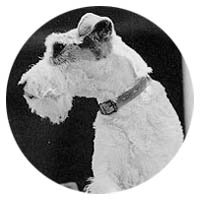
Skippy is both my favorite dog actor and plays my favorite dog character, "Smitty," in one of the greatest films of all time, The Awful Truth starring Cary Grant and Irene Dunne. It's easy to see why they fight over this loveable pooch in their divorce case. In a totally unrelated aside, it's not easy to see how Irene Dunne lost the Oscar that year. If you haven't seen this movie put it at the tippy top of your Netflix queue. You won't regret it. Although you might start weeping inconsolably when you realize that the phrase "they don't make 'em like they used to" is an actual thunderbolt truth rather than a reductive cliché. Today's romantic comedies are like microorganisms compared to yesterday's higher beings. And isn't evolution supposed to work in the opposite direction? sigh.

Use the comments to discuss this entry or make a request for next week
previous: Cher (for David) and The Sound of Music (for Anonymous)

tags: dogs, entertainment, cats, mermaids, movies, Snakes on a Plane